
Explore Egypt’s highlights in seven unforgettable days
Seven days in Egypt may sound brief for a country with thousands of years of history, but a carefully planned route can introduce you to its most important ancient landmarks, vibrant cities, and timeless Nile scenery.
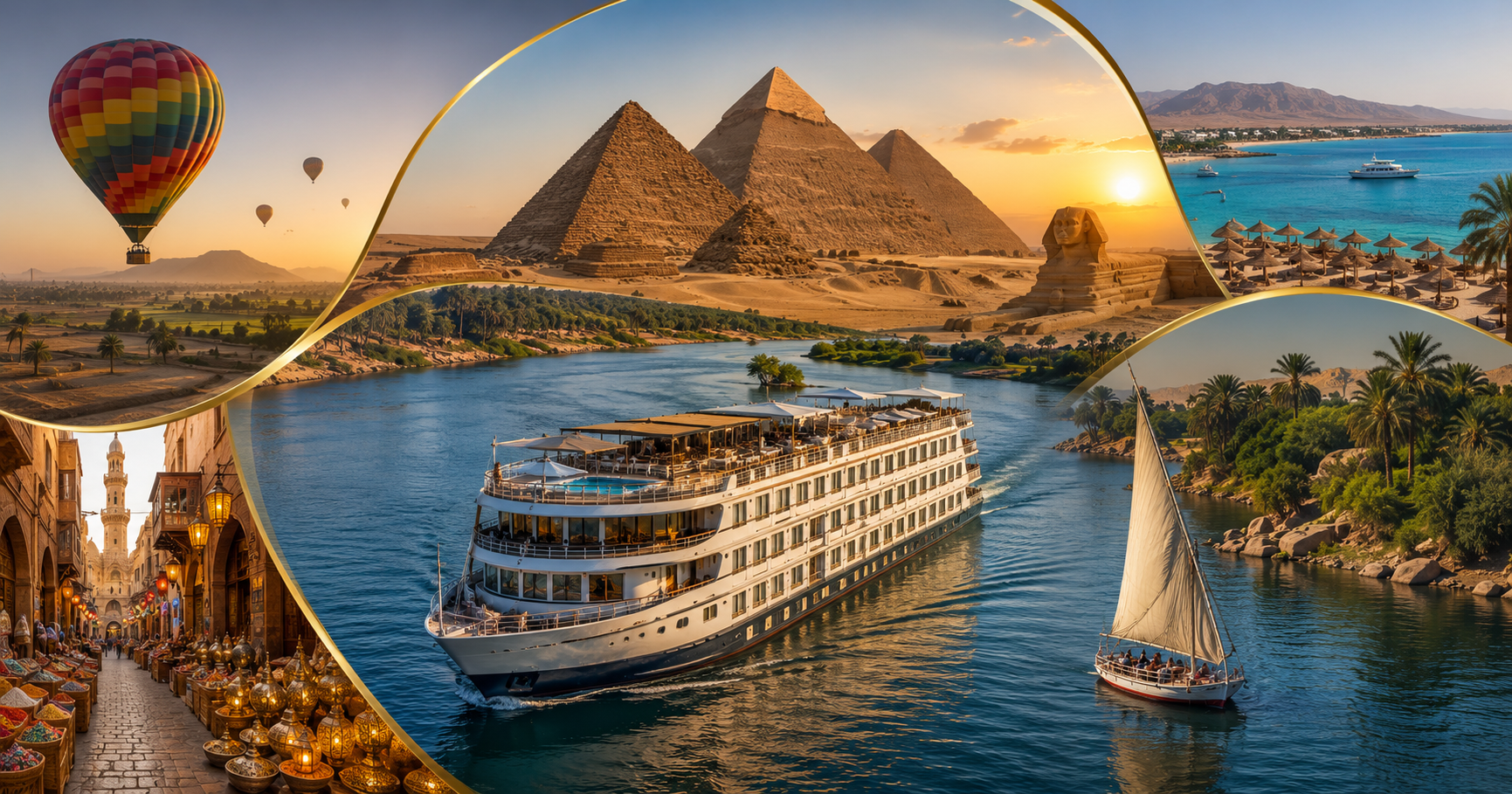
The perfect 7-day Egypt itinerary begins in Cairo with the Pyramids of Giza and the capital’s cultural treasures, continues to Luxor’s temples and royal tombs, and then follows the Nile south toward Aswan. Along the way, a Nile cruise connects many of Upper Egypt’s most remarkable archaeological sites without requiring you to change hotels every night.
This itinerary is ideal for first-time visitors who want to experience Cairo, Luxor, Aswan, Edfu, and Kom Ombo in one week. It combines guided sightseeing with relaxed sailing and can be customized according to your arrival time, preferred cruise direction, accommodation level, and travel style.
VIPXPLOR offers a confirmed 7-day Cairo, Luxor, Aswan, and 5-star Nile cruise package designed around this classic route.
7-Day Egypt Itinerary at a Glance
| Day | Destination | Main Experiences |
|---|---|---|
| Day 1 | Cairo | Arrival and optional evening activities |
| Day 2 | Giza and Cairo | Pyramids, Sphinx, museum, and historic Cairo |
| Day 3 | Luxor | Karnak Temple, Luxor Temple, cruise check-in |
| Day 4 | Luxor and Edfu | Valley of the Kings, Hatshepsut Temple, sailing |
| Day 5 | Edfu and Kom Ombo | Temple of Horus and Kom Ombo Temple |
| Day 6 | Aswan | Philae Temple, High Dam, felucca sailing |
| Day 7 | Aswan or Cairo | Abu Simbel option or departure |
Day 1: Arrive in Cairo
Your Egypt itinerary begins in Cairo, where most international travelers enter the country.
After meeting your representative at the airport, transfer to your hotel and take time to rest after the flight. Depending on your arrival time, you may choose a relaxed evening activity rather than beginning with intensive sightseeing.
A Nile dinner cruise, a walk through downtown Cairo, or an evening visit to Khan El Khalili can provide an enjoyable introduction to the city. However, travelers arriving late should prioritize sleep because the following day includes several of Egypt’s most important attractions.
Choose accommodation in Giza for convenient access to the pyramids or central Cairo for easier access to museums, restaurants, and historic neighborhoods.
Day 2: Explore the Pyramids of Giza and Cairo
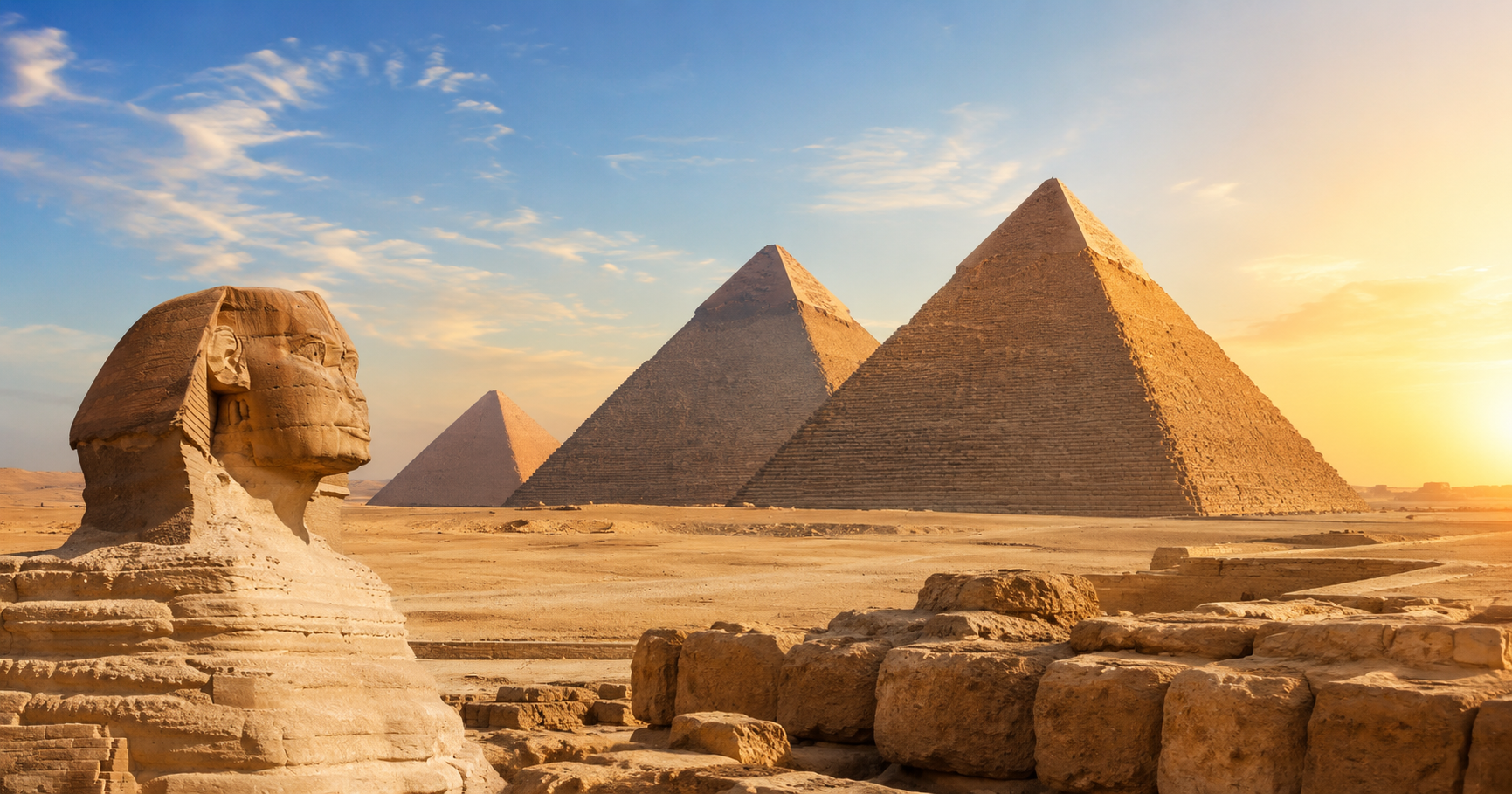
Begin your first full day at the Giza Plateau, home to the Great Pyramid of Khufu, the Pyramid of Khafre, the Pyramid of Menkaure, and the Great Sphinx.
The Great Pyramid is the last surviving wonder of the ancient world and the defining landmark of any first-time trip to Egypt. Arriving early provides more comfortable temperatures and additional time to explore the plateau’s viewpoints and surrounding tombs.
A licensed Egyptologist guide can explain the purpose of the pyramid complexes, the construction theories, and the relationship between the pyramids, temples, and royal burial traditions.
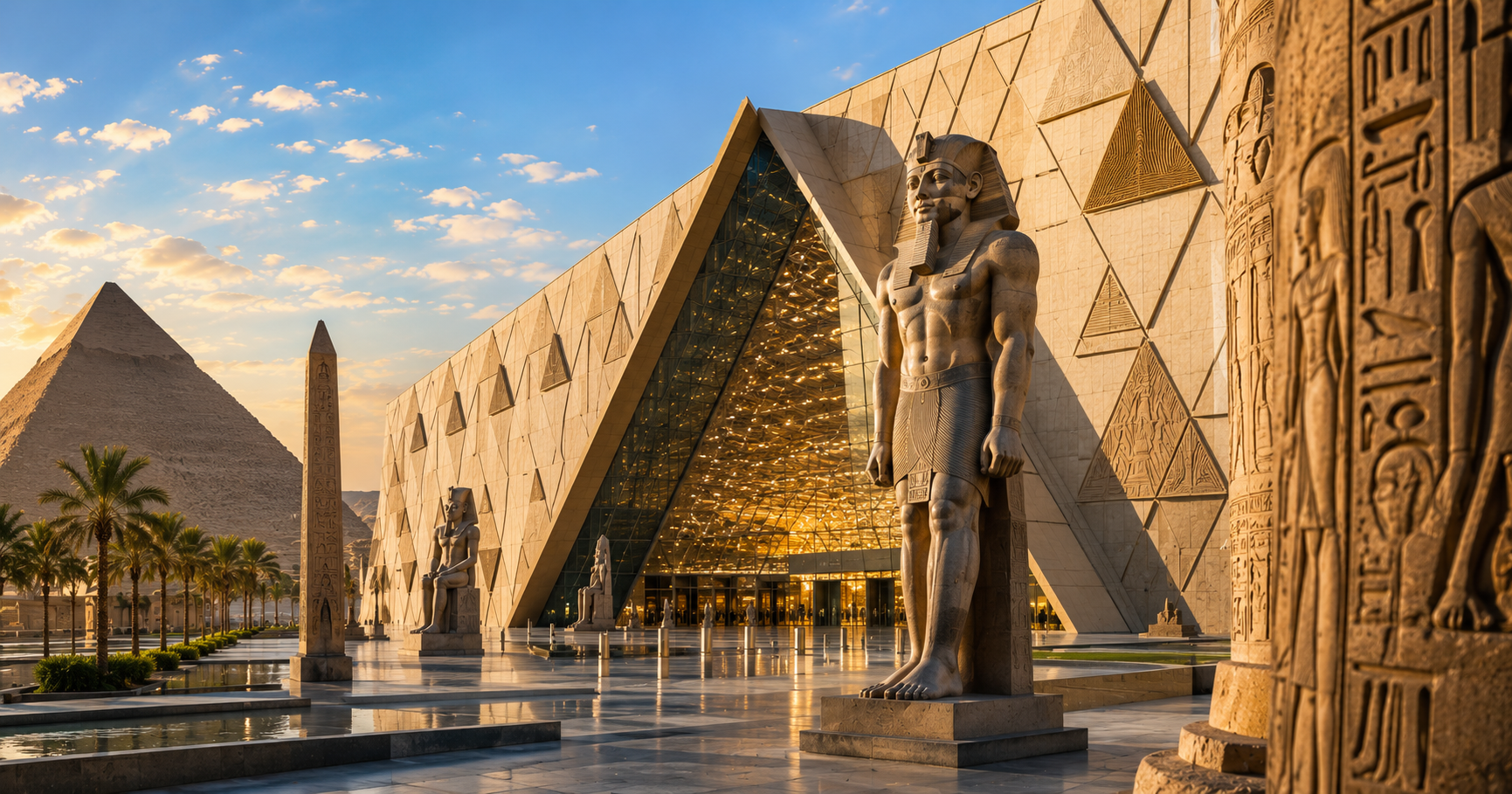
After Giza, continue to one of Cairo’s major museums to view statues, funerary objects, royal treasures, and artifacts connected to the places you will visit later in the week.
Complete the day in historic Cairo. Walk through Al-Muizz Street, explore Khan El Khalili Bazaar, or visit the Citadel of Saladin and its elevated views across the capital.
Browse the available VIPXPLOR Cairo tours and experiences when planning your first two days.
Optional Addition: Saqqara
Travelers who prefer archaeology to city sightseeing may replace part of the afternoon with Saqqara. The site contains the Step Pyramid of Djoser, decorated tombs, and monuments illustrating the development of pyramid construction before Giza.
Because this is a tightly scheduled one-week itinerary, Saqqara should be arranged with private transportation to avoid losing time.
Day 3: Fly to Luxor and Visit the East Bank
Take an early domestic flight from Cairo to Luxor. Flying is generally the most practical choice for a seven-day itinerary because it protects valuable sightseeing time.
After arriving, begin with Luxor’s East Bank.
Explore Karnak Temple
Karnak is one of Egypt’s largest and most impressive temple complexes. Its most famous section is the Great Hypostyle Hall, where enormous columns covered with hieroglyphs create a monumental ceremonial space.
The complex developed over centuries, with different rulers adding gateways, chapels, obelisks, courtyards, and sacred structures.
Visit Luxor Temple
Continue to Luxor Temple, which stands closer to the modern city center. The temple is especially atmospheric in the late afternoon or after sunset, when the columns, statues, and pylons are illuminated.
Luxor Temple was historically connected to Karnak by the Avenue of Sphinxes, creating a ceremonial route through ancient Thebes.
After sightseeing, check in to your Nile cruise. Most cruise programs include accommodation, full-board meals, and scheduled excursions.
Explore additional options on the VIPXPLOR Luxor page.
Day 4: Discover Luxor’s West Bank and Begin Sailing
The fourth day of your Cairo, Luxor, and Aswan itinerary focuses on the royal monuments of Luxor’s West Bank.
Enter the Valley of the Kings
The Valley of the Kings contains tombs created for New Kingdom pharaohs. Their corridors and burial chambers feature colorful scenes connected to gods, rituals, and the journey into the afterlife.
General admission usually covers a selection of open tombs, while certain famous tombs may require separate tickets. Your guide can help you choose the most rewarding options available during your visit.
Visit the Temple of Hatshepsut
Continue to the mortuary temple of Queen Hatshepsut at Deir El-Bahari. Built against towering limestone cliffs, its terraces and colonnades create one of the most distinctive architectural settings in Egypt.
Hatshepsut ruled as pharaoh and used the temple’s decoration to reinforce her legitimacy, achievements, and divine connections.
Stop at the Colossi of Memnon
Before returning to the cruise, stop at the Colossi of Memnon. These enormous seated statues once guarded the entrance to the mortuary temple of Amenhotep III.
Your ship will then begin sailing toward Edfu, allowing you to rest and enjoy views of villages, farmland, palm trees, and desert landscapes along the Nile.
Day 5: Visit Edfu and Kom Ombo Temples
Wake up near Edfu and visit the Temple of Horus, one of the best-preserved ancient temples in Egypt.
Its monumental pylon, courtyards, columns, and sanctuary offer a clear impression of how a Ptolemaic temple was organized. The carved scenes also provide valuable information about rituals and the mythological conflict between Horus and Seth.
Return to the ship and continue sailing south toward Kom Ombo.
Explore the Double Temple of Kom Ombo
Kom Ombo is unusual because it was dedicated to two gods: Sobek, associated with crocodiles, and Horus the Elder.
The building’s double design includes paired halls, sanctuaries, and ceremonial spaces. A nearby museum displays crocodile mummies and explains Sobek’s importance in the region.
The temple’s position beside the river makes it particularly attractive around sunset. After the visit, return to the ship for dinner and continue toward Aswan.
Day 6: Discover Aswan and Philae Temple
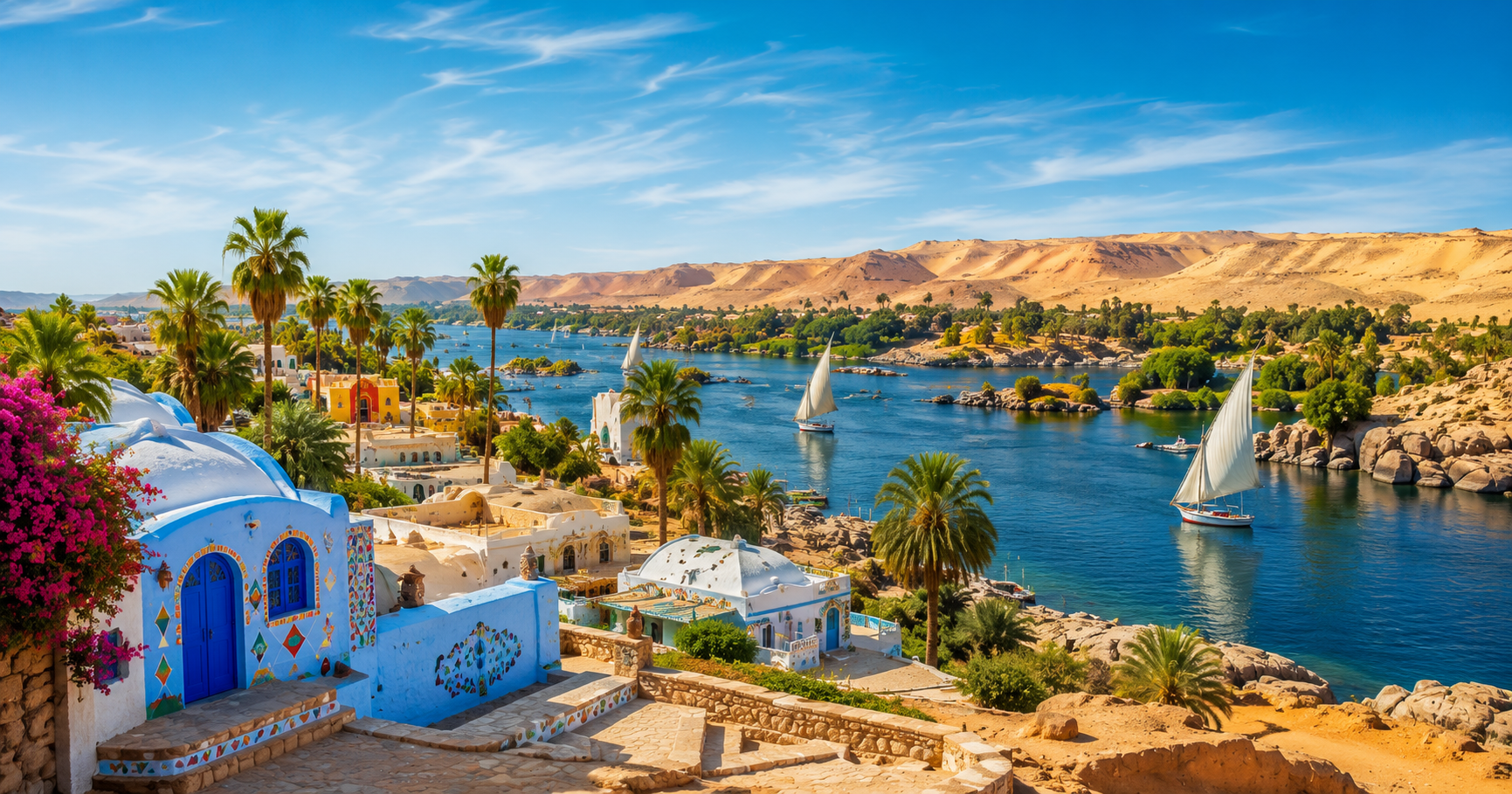
Aswan offers a calmer atmosphere than Cairo and Luxor. Its granite islands, palm-covered riverbanks, traditional boats, and Nubian heritage make it one of the most memorable stops on an Egypt Nile cruise itinerary.
Visit Philae Temple
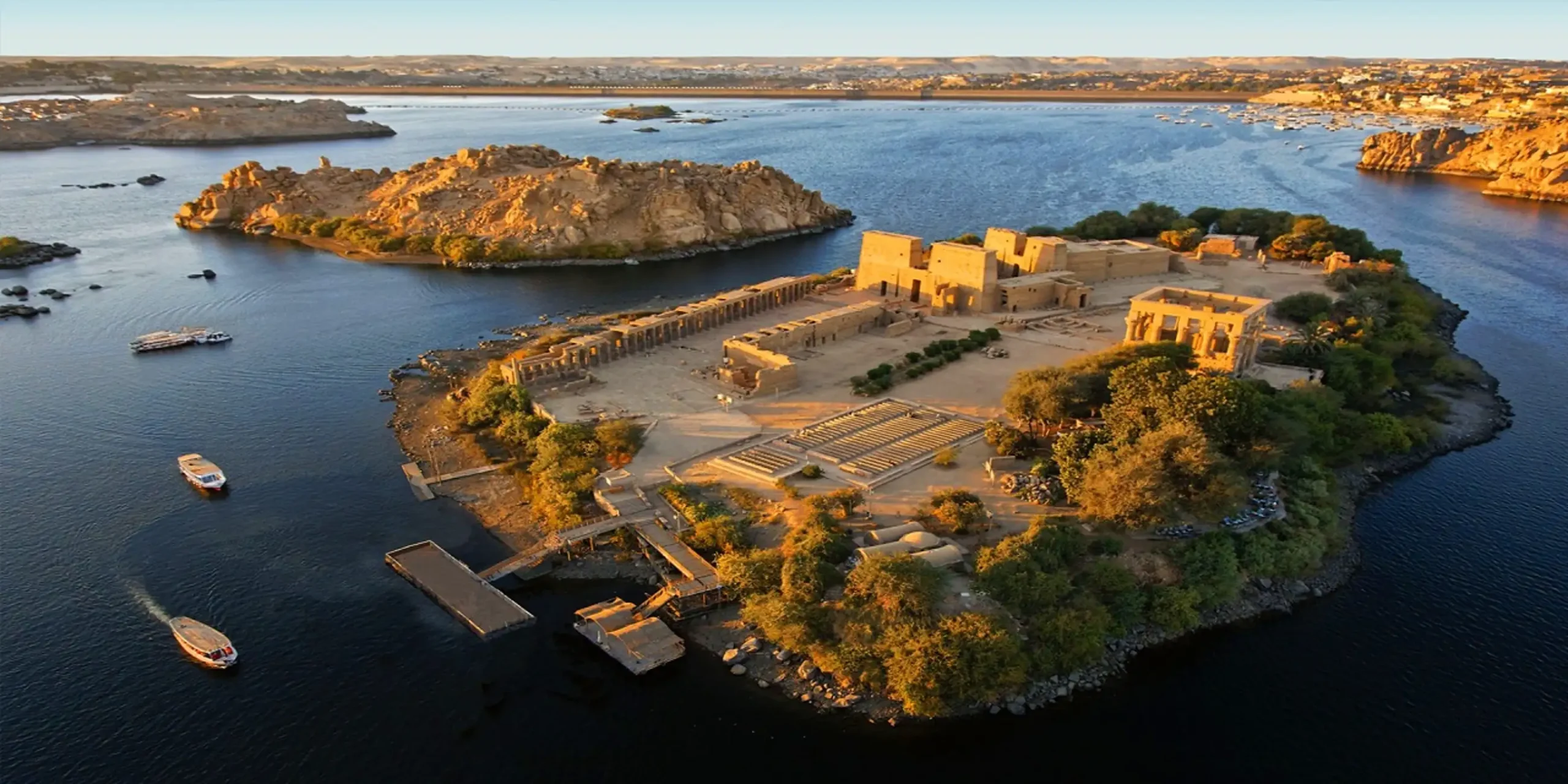
Begin at Philae Temple, reached by a short motorboat ride.
The complex was dedicated mainly to the goddess Isis and was relocated to protect it from flooding. Its elegant colonnades, reliefs, gateways, and island setting make it one of southern Egypt’s most beautiful archaeological attractions.
See the Aswan High Dam
Continue to the Aswan High Dam, a major modern engineering project that transformed agriculture, electricity production, and water management in Egypt.
The stop provides geographical context for Lake Nasser and the international effort that relocated several threatened monuments.
Sail on a Felucca
Later, take a traditional felucca ride around Aswan’s islands. Sailing without a motor offers a peaceful way to appreciate the Nile’s scenery and provides a welcome pause after several days of temple visits.
Travelers interested in local culture may also add a respectful visit to a Nubian village.
Browse VIPXPLOR’s Aswan tours for available excursions and customizable experiences.
Day 7: Visit Abu Simbel or Return to Cairo
Your final day depends on your departure schedule.
Option One: Abu Simbel Day Trip
Travelers with a later flight or an additional night can begin before sunrise and visit Abu Simbel.
Built by Ramesses II, the main temple is guarded by four colossal seated statues. The nearby temple dedicated to Queen Nefertari is equally significant. Both were relocated during an extraordinary international conservation project to save them from the rising waters of Lake Nasser.
Abu Simbel is unforgettable, but the excursion requires an early start and several hours of travel. It should only be included when flight timing allows.
Option Two: Return to Cairo
Travelers with an international departure can fly from Aswan to Cairo and connect with their onward flight.
Leave a generous buffer between domestic and international flights, particularly when tickets are issued separately. Booking transfers and flights as part of an organized Egypt tour can reduce logistical stress.
Is Seven Days Enough for Egypt?
Seven days are enough to experience Egypt’s essential highlights, but the itinerary will be active.
A well-organized week can include the Pyramids, Cairo, Luxor’s East and West Banks, Edfu, Kom Ombo, Aswan, and a Nile cruise. Private transfers, domestic flights, pre-arranged tickets, and an experienced guide help prevent unnecessary delays.
Travelers who prefer a slower pace should consider ten days. The additional time can be used for Saqqara, Abu Simbel, Alexandria, a longer stay in Cairo, or relaxation on the Red Sea.
Best Time for a Cairo, Luxor, and Aswan Itinerary
The cooler period from October through April is generally the most comfortable for sightseeing, particularly in Luxor and Aswan.
December and January often bring pleasant daytime conditions, but they can also attract larger crowds. October, November, February, March, and early April may offer a useful balance between temperature and visitor levels.
Summer travel is possible, but archaeological visits should begin early, with shaded breaks and adequate hydration planned throughout the day.
Practical Tips for One Week in Egypt
Book domestic flights and Nile cruises early, especially during peak travel periods. Cruise departure days are fixed, so your Cairo schedule should be built around the available sailing date.
Carry lightweight clothing, comfortable walking shoes, sun protection, and a modest layer for religious or cultural sites. Winter mornings and evenings can feel cooler than expected, especially on the water.
Keep small Egyptian-pound notes for tips and minor expenses. Confirm which entrance fees, meals, transfers, and optional activities are included in your package before arrival.
Most importantly, avoid adding too many distant attractions. A focused itinerary covering Cairo and the Nile Valley usually creates a better first trip than an exhausting checklist.
Why Book Your 7-Day Egypt Tour with VIPXPLOR?
Coordinating hotels, domestic flights, airport transfers, cruise schedules, guides, and attraction visits can be challenging when you have only seven days.
VIPXPLOR’s private and customizable itineraries bring these elements together in one organized journey. The company’s Ultimate Egypt Highlights package covers Cairo, Luxor, Aswan, and a five-star Nile cruise over seven days and six nights.
You can also explore other confirmed Egypt tour packages or contact VIPXPLOR to personalize the route according to your preferred hotels, cruise category, arrival dates, and optional excursions.
Frequently Asked Questions
What can you see in Egypt in seven days?
A seven-day itinerary can cover Cairo and the Giza Pyramids, Luxor’s temples and tombs, Edfu, Kom Ombo, Aswan, and a multi-night Nile cruise.
Is it better to cruise from Luxor to Aswan or Aswan to Luxor?
Both directions cover similar major attractions. The better option depends on available sailing dates, flight schedules, and the number of cruise nights.
Should I fly or take the train from Cairo to Luxor?
For a one-week itinerary, flying usually saves the most time. Overnight trains may suit travelers who want a different experience but can make the schedule less predictable.
Can Abu Simbel fit into a seven-day Egypt itinerary?
Yes, but only with careful scheduling. It is usually added from Aswan on the final day or included by reducing time allocated elsewhere.
Is a Nile cruise worth it for first-time visitors?
Yes. A Nile cruise combines accommodation, transportation, meals, river scenery, and access to major sites between Luxor and Aswan, making it particularly practical for first-time travelers.
Start Planning Your Perfect Week in Egypt
A week in Egypt can take you from the energy of Cairo and the scale of the Great Pyramids to Luxor’s royal tombs, the riverside temples of Upper Egypt, and the peaceful landscapes of Aswan.
The key is not to see everything, but to connect the country’s essential experiences in a logical route.
With expert planning, private guidance, and a comfortable Nile cruise, seven days can become an unforgettable introduction to Egypt’s ancient history and living culture.
Start with the confirmed VIPXPLOR seven-day Egypt package and turn your first journey through Egypt into a seamless, carefully organized experience.